- Does shockwave therapy work for plantar fasciitis?
Shockwave therapy has been proven to be very effective for patients with plantar fasciitis.


Put simply, shockwave therapy delivers a wave of mechanical energy to the plantar fascia. This mechanical energy in turn triggers inflammation, increasing blood flow to the plantar fascia. Shockwave therapy harnesses the body’s own healing response.
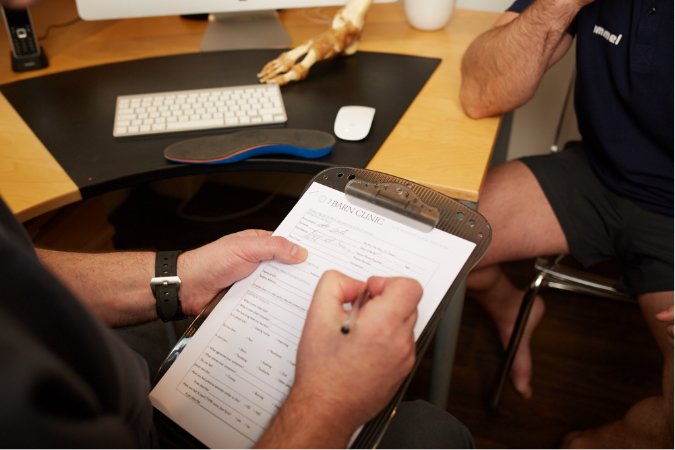
Shockwave therapy has been proven to be very effective for patients with plantar fasciitis.
Some studies show almost 90% of patients will be cured of pain after a course of treatment.
Shockwave therapy for Plantar Fasciitis is a non invasive treatment with no downtime. The patient can drive away from the clinic the straight away. With such a high success rate, we have a high patient satisfaction rate.
During your initial assessment you will be assessed by Mr Weaver. This assessment will include an ultrasound scan of your plantar fascia the scan data is often predictive of how many sessions you will require. However, patients require somewhere between 3-6 sessions, and in severe cases 8 sessions.
A patient once described the treatment by saying “…it’s like having a mini pneumatic drill placed against your heel for 30 minutes…you definitely know you are having something done…the initial discomfort is definitely manageable and the discomfort eases off after a few minutes.”
No. The treatment is well tolerated by patients. If you are finding the treatment a struggle the settings on the machine can be altered to reduce your discomfort levels.
Most patients report no issues after treatment at all. A small number of patients report a temporary increase in pain and swelling and bruising or numbness of the area treated. All of these issues are transient lasting only 1-2 days and are typically not enough to interfere with you going about your normal activities of daily living.
Some providers do cover treatment costs. However, policies vary enormously so we recommend that you check with your provider.
Yes.
In rare cases, there can be some transient tingling and redness after the procedure. This should resolve in a few days.