- Treatment Location
Our shockwave treatment is now available at both our London and Sheffield clinics.


Ledderhose disease / Plantar Fibroma are conditions that affect the connective tissue in the hands and feet, causing the formation of benign nodules or fibrous cords respectively. These conditions can lead to debilitating symptoms and functional impairment. Focused extracorporeal shock wave Therapy (fESWT) has emerged as a potential treatment modality for both Ledderhose disease / Plantar Fibroma. Focused shockwaves should not be confused with radial shockwave, which does not have the same effect.
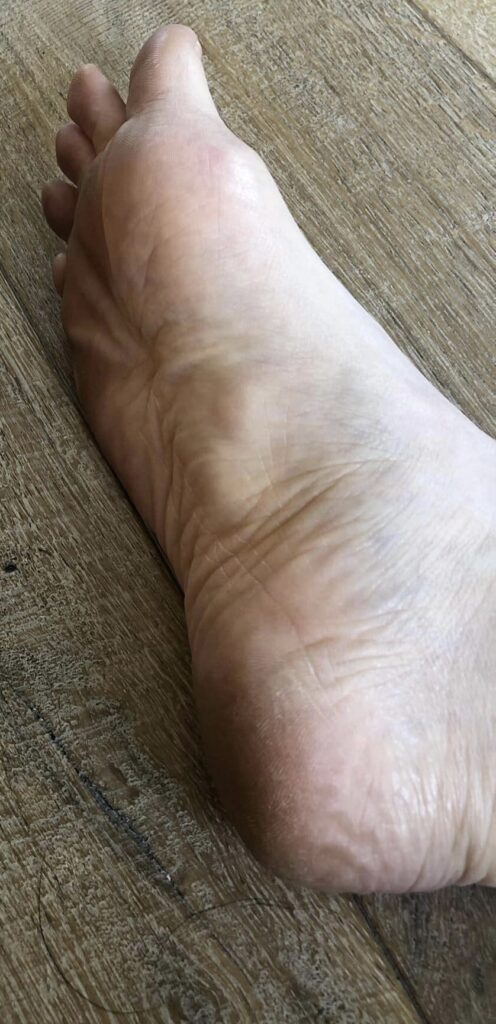
Ledderhose disease, also known as plantar fibromatosis or plantar fibroma, manifests as fibrous nodules along the plantar fascia in the foot. The mainstay of treatment for symptomatic Ledderhose disease traditionally involves surgical excision or radiation therapy.
In recent years fESWT has gained attention, as a non-invasive alternative to radiotherapy and surgery. fESWT applies high-intensity shock waves to the affected area, promoting tissue regeneration and reducing fibrous nodule size.
One study conducted by Pajardi et al. (2021) demonstrated the effectiveness of focused ESWT in Ledderhose disease / plantar fibroma treatment. They found that patients who received ESWT reported a significant improvement in pain and functional outcomes compared to those who underwent conservative treatment alone. The study concluded that ESWT “can be considered as a valuable therapeutic option for Ledderhose disease, particularly in patients who wish to avoid surgery”.
How it Works:
Shock waves generated during the treatment initiate a cascade of cellular responses, including neovascularization, inflammation modulation, and disruption of fibrous tissue. This process can lead to the regression of plantar fibroma / fibrous nodules in Ledderhose disease.
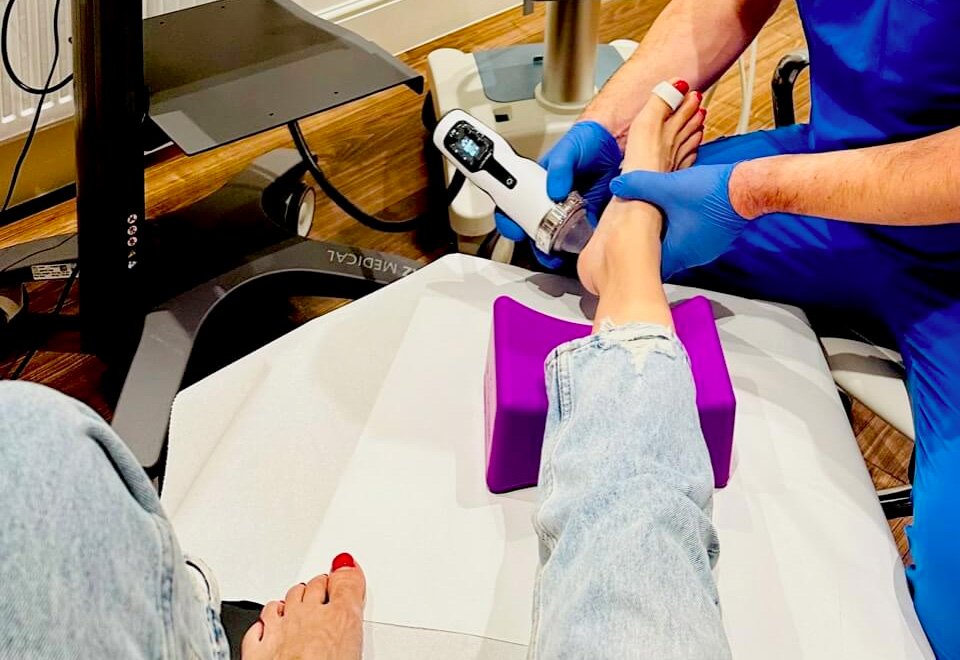
Imaging techniques, such as ultrasound and magnetic resonance imaging (MRI), have been instrumental in evaluating the efficacy of FSWT for Ledderhose disease. A study conducted by Rompe et al. (2008) utilised MRI to examine the effects of FSWT on the plantar fascia. The study reported a significant reduction in nodule size and improved tissue architecture after shockwave treatment. Additionally, Grasel et al. (2014) employed high-resolution ultrasound to assess changes in the nodules’ echogenicity. They observed a reduction in the thickness and density of nodules, indicating the successful disintegration of fibrotic tissue.
A recent study of 5 patients with a mean pre-treatment pain score of 6/10, who received between one to three fESWT sessions had there their pain mean pain scores reduced to 2/10 after 14 days and 1/10 at 3 months, no adverse reactions were reported
FSWT offers several advantages compared to other treatment modalities, such as surgery and radiation therapy. Firstly, FSWT is a non-invasive procedure that does not require incisions or anaesthesia. Additionally, FSWT is associated with no recovery time and reduced post-treatment pain, allowing patients to resume daily activities more quickly. Surgical interventions, on the other hand, often involve a prolonged recovery period and potential complications, such as wound infections or scarring and are frequently associated with recurrences of additional new lesion.
Moreover, FSWT does not expose patients to the potential risks associated with radiation therapy, such as radiation-induced tissue damage or radiation dermatitis. This makes FSWT a safer alternative, particularly for patients with contraindications to radiation treatment.
Furthermore, FSWT has demonstrated long-lasting effects with low recurrence rates. Surgery, although effective in removing existing nodules, may be limited in preventing the development of new nodules or fibrous bands. FSWT, by virtue of its ability to stimulate tissue healing and remodelling, addresses the underlying pathology and reduces the likelihood of recurrent disease.
Our shockwave treatment is now available at both our London and Sheffield clinics.
Focused shockwave therapy is not a new treatment method. It originated in 1980 for the non-invasive shattering of kidney stones. Initially, it involved directing the shockwave handpiece behind the patient’s back at the kidney level, with gel placed between the apparatus and the skin. This technique shattered kidney stones by passing energy through the body. Later, focused shockwave therapy gained prominence during the Atlanta Olympics in the United States and was subsequently utilized to treat various musculoskeletal conditions, including Dupuytren’s disease.
Focused shockwave therapy delivers high-frequency acoustic and electromagnetic energy to the targeted tissues. This energy induces a cascade of biological events, triggering tissue responses. Depending on the condition being treated, different energy levels are used. For inflammatory conditions like Achilles tendinitis or bursitis, low-level energy is often employed, providing a soothing and calming effect on the tissues. The efficacy of focused shockwave therapy has been demonstrated to be comparable, if not superior, to other treatments such as steroid injections, platelet-rich plasma (PRP), and in some cases, surgery.
Focused Shockwave therapy achieves two key outcomes. It initiates a physical restructuring of the dense nodules, and it diminishes pain receptors by influencing the nerve tissue surrounding the nodules, thereby alleviating discomfort. A significant advantage of Focused Shockwave therapy lies in its impact on the inflammatory aspect of Ledderhose disease.
Recent insights have revealed the prominent role of inflammation in ledderhose disease, and Focused Shockwave therapy appears to disrupt this inflammatory process. Following treatment, there is a notable reduction in cytokines and other detrimental inflammatory markers associated with the condition. Moreover, Focused Shockwave therapy stimulates the activity of cells responsible for quelling inflammation while suppressing undesirable cellular pathways. This mechanism underscores the therapeutic efficacy of Focused Shockwave therapy.
For those with a small, newly emerging nodule, a single treatment may suffice, effectively reversing its progression.
However, if multiple nodules are present, a regimen of three treatments is usually recommended.
We generally space these sessions one to two weeks apart, although intervals of four to six weeks have also been utilised without significant impact on efficacy.
Discomfort during the procedure is possible but generally manageable. On a scale of 1 to 10, with 10 representing the worst imaginable pain and 1 indicating minimal discomfort, patients typically report peak discomfort of around 4 out of 10 during the initial session. However, the treatment itself is brief, lasting only a few minutes, as we administer the necessary shocks to the nodule or cord to achieve therapeutic effects. Upon discontinuation of the treatment, discomfort dissipates immediately, with no lingering pain or discomfort.
Subsequent sessions tend to be more comfortable for patients. The initial treatment reduces inflammatory cells within the nodule and dampens associated pain pathways. As a result, patients often experience significantly reduced discomfort during subsequent sessions. Settings that previously elicited a 4 out of 10 discomfort rating may only result in a 0 or 1 out of 10 rating during the second session.
Throughout subsequent treatments, we gradually increase energy levels, with patients finding the discomfort increasingly manageable and tolerable. Comparatively, outcomes from shockwave therapy closely resemble those of radiotherapy, but without the unpleasant side effects commonly associated with the latter. Unlike radiotherapy, which can lead to skin thinning, intense redness, and itching lasting several years, shockwave therapy typically only results in brief, localized discomfort lasting for a few minutes. In my experience, patients generally find shockwave therapy entirely tolerable.
Shockwave therapy and radiotherapy yield comparable results in terms of pain reduction, and reduction in nodule size. In fact, shockwave therapy may slightly outperform radiotherapy in terms of reducing nodule size. Additionally, the effects of shockwave therapy typically manifest more rapidly than those of radiotherapy.
However, the most significant distinction lies in the absence of adverse effects associated with shockwave therapy, unlike radiotherapy. Common issues following radiotherapy include skin thinning, intense redness, and prolonged itching, which can be distressing for patients. Shockwave therapy, on the other hand, does not present these drawbacks.
Histological studies examining nodules treated with both shockwave therapy and radiotherapy reveal similar outcomes. Both therapies downregulate pathways responsible for collagen and fibroblast proliferation, as well as inflammatory pathways. Although achieved through different mechanisms, shockwave therapy demonstrates comparable efficacy to radiotherapy.
Moreover, unlike radiotherapy, which cannot be repeated due to the cumulative risk of skin cancers, shockwave therapy can be administered multiple times if needed. Patients can undergo treatment for new lesions as they arise, without the need to wait for lesions to reach a certain size or severity. This proactive approach often results in lesion reversal rather than progression.