- Does it hurt?
The forefoot is fully numbed first, so the procedure is comfortable; most people feel only pressure.


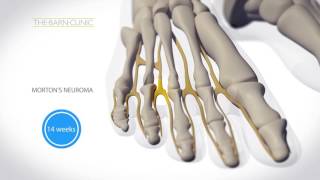
Cryosurgery is a regenerative treatment for Morton’s neuroma. Rather than removing the nerve, it harnesses the nerve’s own capacity to repair and regenerate — clearing the painful neuroma and resetting the nerve to how it worked before the problem began. It is minimally invasive, carried out in clinic under local anaesthetic and guided by ultrasound, and because the nerve is preserved there is no stump neuroma to form.
1st UK Clinic Offering Cryosurgery with over 20,000 Cases Treated
Safe & Effective Alternative to Excision Surgery

Excellent Success Rates & Low Complications. No Stitches or Sutures

Ultrasound Imaging and Elastography as standard

3 Days Downtime, Drive After 3 Days, No Crutches
Excellent Success Rates & High Patient Satisfaction Rates
Most surgery for Morton’s neuroma is built on removal — cut the affected nerve out, and hope the pain goes with it. Cryosurgery is built on regeneration. Using precisely controlled cold, we clear the thickened, painful neuroma tissue while leaving the nerve’s own protective framework completely intact — and that intact framework is exactly what the nerve needs to repair itself.
Over the following weeks the nerve regenerates along its own preserved pathway, and healthy function returns. In effect the slate is wiped clean: the neuroma is cleared, and the nerve is reset to how it behaved before the problem began. This is the fundamental difference from surgery. Cutting a nerve out leaves a severed end that can sprout into a new, often more painful growth — a stump neuroma — whereas cryosurgery preserves the nerve and harnesses its regenerative power, so there is simply nothing for a stump neuroma to form from.
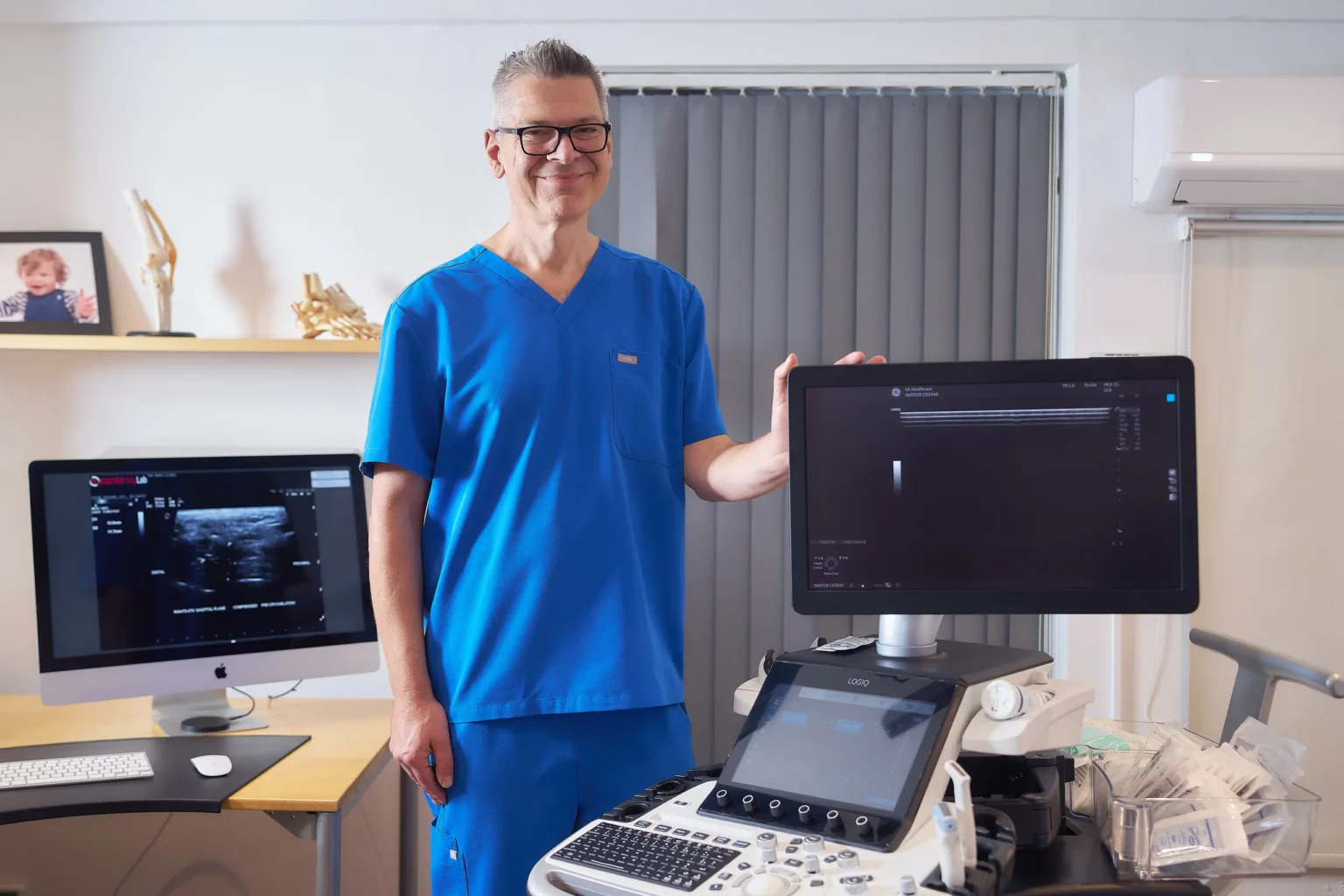
Using diagnostic ultrasound, we pinpoint the neuroma and guide a fine probe to it with millimetre accuracy. The probe delivers a controlled, very low temperature to the nerve for a short, measured time. That cold interrupts the fibres carrying the pain while preserving the structures around them — which is why the technique is described as nerve-sparing. Because everything is watched live on ultrasound, the treatment is targeted precisely where it is needed, and nowhere else.
Most people are back on their feet quickly. The forefoot usually needs two to three months to settle fully as the tissue reabsorbs, and during that time a wide, cushioned, level (zero-drop) shoe takes pressure off the healing area and makes recovery far more comfortable. We give you clear, individual footwear and activity advice before you leave.
Cryosurgery suits most people with a confirmed Morton’s neuroma, including those who have tried insoles, footwear changes or steroid injections without lasting relief. It is also one of the few nerve-sparing options for a stump neuroma after previous surgery. Every treatment starts with a proper diagnostic ultrasound assessment — several forefoot conditions mimic one another, so we confirm exactly what is causing your pain first, and only treat once we are sure.
We are one of Europe’s most experienced centres for cryosurgery of the forefoot. Your assessment and treatment are carried out by Robin Weaver, using in-house diagnostic ultrasound, at our Sheffield and London (Harley Street) clinics.
The forefoot is fully numbed first, so the procedure is comfortable; most people feel only pressure.
Many neuromas settle after one; some benefit from a second. We’ll be honest about what your scan suggests.
Cryosurgery clears the neuroma and lets the nerve regenerate healthily, so for most people the problem is resolved. In the uncommon event that symptoms return, the treatment can simply be repeated — an option that excision surgery, once the nerve is gone, can’t offer.
That can be a stump neuroma — cryosurgery is one of the few nerve-sparing options for it.