


What is the best form of treatment for resistant warts and verruca, especially if you have received an organ transplant?
Warts and verruca are caused by the human papillomavirus (HPV) and are commonly seen in young people, and some occupational groups, however, there is a group of people, of all ages, that are disproportionally affected by warts and verruca- this group of people that are the most harshly affected are those who have received organ transplants.
Introduction
In this short blog, I give some background information about who gets warts and verruca and why certain laser treatment is the best form of treatment if you are immunocompromised because of an organ transplant.
Who normally gets warts and verruca? Young people and certain occupational groups.

Most who are exposed to the HPV infection will never even develop a wart or verruca because their immune system quietly deals with the virus. Children and young adults are commonly affected by warts and verruca with approximately 12% of children aged between 4 to 6 years and around 24% of those aged 16-18 years having at least one wart or verruca.
Hands are the most common area, followed by the feet. Some studies suggest that boys are slightly more prone to hand warts because of increased rough-and-tumble activity levels that can lead to abrasions of the skin in the hands, allowing the virus to invade the skin.
Similarly, those that work in occupations that can result in an increased risk of abrasions to the skin of the hands have an increased rate of hand warts. One study of over 1000 workers showed 34% of butchers were found to have warts in their hands, presumably due to cuts and nicks, similarly, 20% of fitting engineers and 15% of office workers were found to have warts. The 15 % of office workers having warts simply reflects the prevalence of warts in the general population which is somewhere between 14-15%.

Warts and verruca most commonly affect those that have received an organ transplant.
Studies estimate that at any given moment in time around 15 % of the population will have a wart or verruca, however, there is a subset of the population where 90% of that population have warts or verruca.
Organ transplants are life-changing and life-saving events, however, recipients have to take life-long anti-rejection (immunosuppressants) drugs. Immunosuppressants limit the body’s ability to fight off viral infection and to generate antibodies to viruses including HPV.
A U.K. observational study of kidney transplant recipients found that 5 years after the transplant 90% of recipients had developed warts.
Once infected with viral warts or verruca, transplant recipients find it impossible to clear the wart or verruca, and over time multiple lesions develop. These lesions can cause pain especially if located over weight-bearing areas of the feet, or the upper surface of the fingers or hands as they catch whenever the hand reaches into a pocket. Transplant recipients are far more likely to have multiple lesions rather than just one or two.
Why don’t traditional methods of wart removal work for transplant recipients?
Even for those without any additional medical problems, over-the-counter wart treatments are mostly ineffective and are only marginally superior to placebo treatments, or just ‘doing nothing’. So, unfortunately, over-the-counter treatments don’t cut it for transplant recipients. This only leaves heavy-duty treatments such as potent acids, freezing known as cryosurgery, needling, microwave treatment, etc.
The problem is that even heavy-duty treatments don’t work that much better for transplant recipients, because they mostly rely to a greater or lesser extent on the immune response. Such treatments are designed to stimulate an immune response. The immune response plays an important role in the success of most wart treatments. The inflammation and subsequent immune response caused by such treatments alert the body to the presence of the HPV virus which normally goes undetected. However, the immune response of those with a transplant is largely diminished by immunosuppressant drugs.
Treatments designed to have a thermal impact such as cryosurgery and microwave tend to be painful and unsuitable for children, furthermore, there is evidence that such treatments have no impact on the DNA of the virus.
The best wart or verruca treatment for those taking immunosuppressant drugs such as azathioprine is a form of laser treatment, with two types of laser in particular, long pulsed Nd YAG and pulsed dye lasers (PDL), both such lasers are referred to as non-ablative. Ablative lasers are ‘cutting’ lasers that can remove tissue and leave an open bleeding wound and can for some cause scarring, whereas non-ablative lasers don’t cause any immediate bleeding and are not associated with scarring.
Laser and Viral DNA
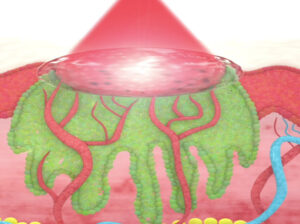
Studies show that non-ablative lasers such as Nd YAG and pulsed dye denature the viral DNA of HPV to the point that 0% viral DNA can be seen after laser treatment, compared to other treatments that leave 97% of the viral DNA behind. Additionally, non-ablative lasers also target the wart’s blood supply, meaning that the mode of action does not rely on an immune response.
Is one form of non-ablative laser better than the other?
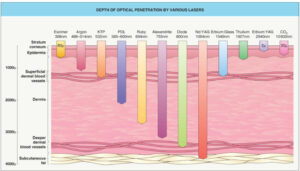
Our 11-year experience of laser warts and verruca treatment is that ideally, you need access to both Nd YAG and pulsed dye lasers (PDL) but if you only could choose the one you would choose the Nd YAG. Both PLD and Nd YAG lasers target blood vessels, making them an excellent choice for warts and verruca, however, the Nd YAG has the greatest depth of penetration of all lasers, meaning very deep warts and verruca can be reached. However, Nd YAG is not as suited to treating children or very large superficial lesions, for such lesions and children Pulsed dye lasers are a much better choice of the laser as PDL is usually well tolerated by children.
The sensation of receiving PDL treatment is often compared to the twang of a rubber band against the skin and compared to other professional treatments PDL is the most comfortable and well-tolerated by children. A 2022 study of 90 children comparing PDL, microwave, and cryosurgery found PLD had the highest clearance rates. Not only were the clearance rates of PDL superior, the rates of reported adverse reactions after treatment were dramatically lower in the PDL group, 16% reported an adverse reaction following pulsed dye laser compared to 57% for microwave and 63% for cryosurgery.
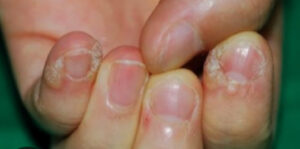
Another huge advantage of pulsed dye laser and Nd YAG treatment is that it is the only form of treatment that easily can treat warts that sit in the grooves of the nail folds and beneath a finger or toenail (periungual). Periungual warts can be easily treated with both pulsed dye laser and Nd YAG lasers as the laser energy passes harmlessly through the nail and then into the wart, meaning warts beneath the nail can be treated without removing the nail.
Efficacy and convenience
Non-ablative laser treatments such as Nd YAG and pulsed dye laser have quick procedure times and do not require local anesthetic or sutures, most people can return to work the same day as treatment and can swim and engage in sports after 24 hours. Very few patients report pain following laser treatment, furthermore, we have found laser treatment to be equally as effective and safe for those that are immunocompromised, especially the recipients of organ transplants.
Click here for more information about Laser wart treatments
Conclusion
Nd YAG and pulsed dye lasers are likely the best forms of wart and verruca treatment, particularly as they do not rely on the immune response, they are arguably the very best form of treatment for recipients of organ transplants and pulsed dye lasers are the best form of treatment for children.
Not all non-ablative lasers are created equal. At the Barn Clinic, we do not use Eastern European or Chinese lasers which historically have poor build quality and inconsistent outputs, instead, we only use North American and U.K.-designed and manufactured lasers. All of the laser studies mentioned in this blog refer to North American and Western European lasers only.