


Introduction:
Generally, in medicine it is rare for a new treatment to emerge that is both highly effective and free of side effects, especially for a painful progressive condition such as Dupytren’s and yet that is exactly what has occurred with a new form of treatment called focused shockwave, that has become increasingly popular since 2018.
Dupuytren’s disease is a progressive condition affecting the hand’s connective tissues, causing significant functional impairment and impact an individual’s quality of life. Traditionally, surgical intervention and injections have been commonly used for its treatment. However, emerging evidence suggests that focused shockwave therapy may offer several advantages over these conventional approaches. This blog aims to compare the benefits of focused shockwave as an alternative treatment for Dupuytren’s disease, highlighting its potential to minimise risks, enhance recovery, and provide long-term relief.
Minimised Risks:
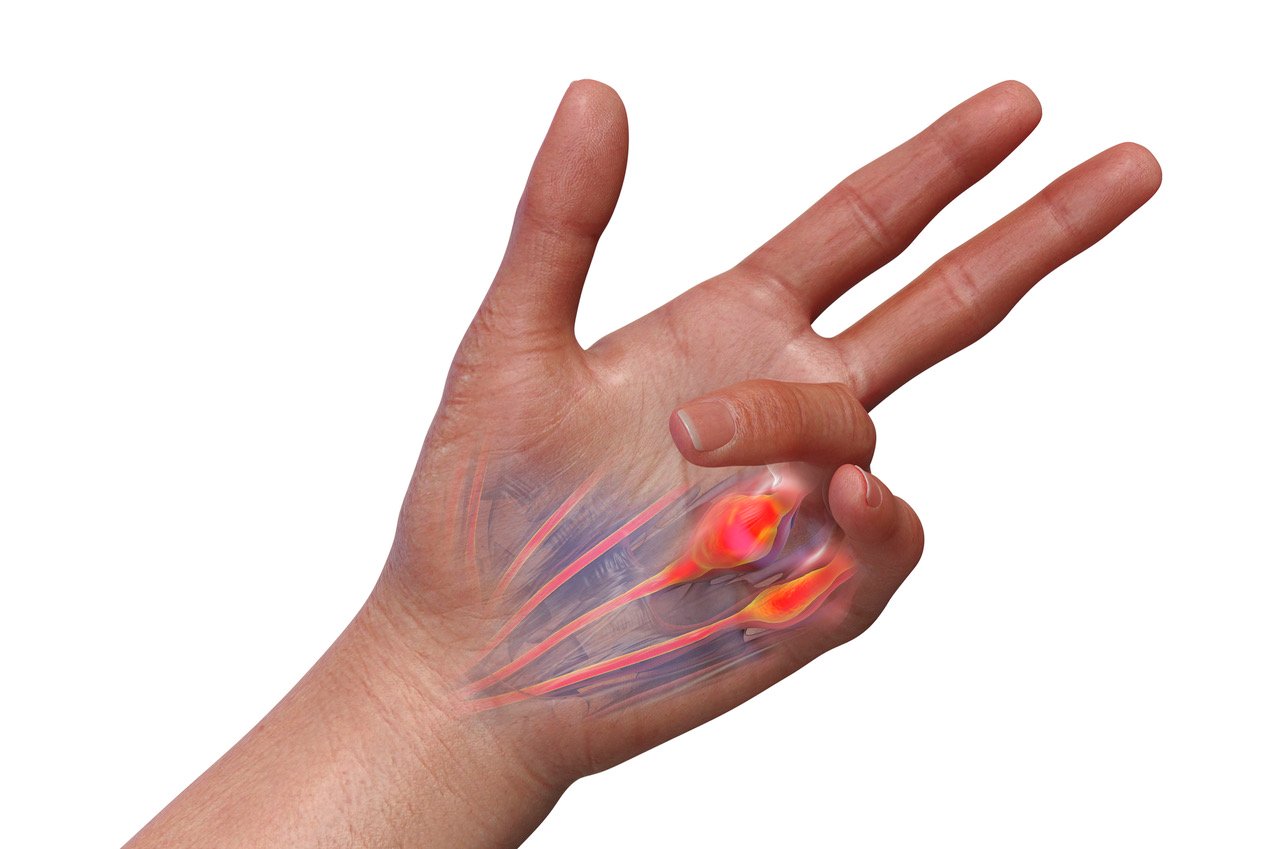
Surgical interventions for Dupuytren’s disease carry inherent risks, including infection, nerve damage and the risk of complex regional pain syndrome, tendon injuries, and prolonged post-operative recovery. By contrast, focused shockwave is a non-invasive and non-surgical treatment modality that bypasses these risks. The high-energy sound waves used in focused shockwaves can effectively break down the fibrotic tissue of Dupuytren’s nodules without disturbing the surrounding healthy tissues. Consequently, focused shockwave minimises the risk of complications associated with invasive procedures.
Enhanced Recovery:
Recovery following surgical procedures for Dupuytren’s disease often involves a prolonged period of hand immobilisation, hand therapy, and rehabilitation exercises. On the other hand, focused shockwave offers a quicker and more comfortable recovery experience. Patients undergoing focused shockwave are typically discharged immediately after the treatment session and can resume their regular activities soon after. As a result, focused eliminates the need for prolonged immobilisation, accelerates the recovery process, and reduces the burden on patients during rehabilitation, the benefits of focused shockwave treatment can often be seen within a week, they include reduced pain, reduced nodule or cord size and sometimes decreased flexion deformity of the finger.
Long-Term Relief:
Although injections such as corticosteroids or collagenase are often utilised to alleviate Dupuytren’s symptoms, their effects are not always long-lasting. In contrast, focused shockwave has demonstrated promising results in providing long-term relief from the symptoms and progression of Dupuytren’s disease. Focused shockwave not only breaks down existing nodules but also stimulates tissue regeneration and improves blood circulation in the affected area. These effects contribute to the potential for long-term recovery and a reduced likelihood of recurrence.
Focused shockwave treatment, much like radiation treatment seems to have to ability suppress cellular inflammation and rapid cell proliferation.
Safely of focussed shockwave.
Although focused shockwave was first used to treat Duyptren’s disease in 2011, it has only recently started to gain momentum as a treatment option. To date, since 2018 there have been approximately 6 peer-reviewed published studies including approximately 150 patients treated for Duyptren’s disease, every single patient improved, and no patient reported a serious adverse side effect. That does not mean focused shockwave couldn’t cause side effects, but its safety profile seems superior to injections surgery and radiation treatment. The safety of shockwave treatment is enhanced when combined with ultrasound imaging, ultrasound imaging confirms that the nodule is not a cancer called sarcoma, which can closely resemble a Duyptren’s nodule. Furthermore, Duyptren’s cords can distort the position of the nerves in the hands, placing nerves in positions that they would not normally be in, making nerve injury more likely, however pre-treatment imaging allows for mapping of the nerves thus improving patient safety.
From the patient’s perspective, what is the main benefit of focused shockwave over other forms of treatment?
Other forms of treatment generally require the sufferer to wait for the condition to get bad enough to justify the risks expense or discomfort associated with treatment, meaning most patients with Duyptren’s when treated often have reasonably advanced disease.
The opposite is true of focused shockwaves. Focused shockwave compared to other treatments is inexpensive, and most easily tolerated with minimal risk, so the sooner treatment is started the better the outcome. If nodules are treated with focused shockwave at onset they rarely progress, this lack of progression can prevent future pain and flexion deformities.
Furthermore, shockwave is easily repeatable with no upper limit on how many times a nodule can be treated.
Conclusion
Shockwave therapy provides several advantages over traditional surgical interventions and injections for the treatment of Dupuytren’s disease. By minimising risks, reducing recovery time, and offering long-term relief, focused shockwave emerges as an appealing alternative. As further research continues to explore its efficacy, focused shockwave has the potential to revolutionise the management of Dupuytren’s disease, enhancing patient outcomes and overall satisfaction. In the future, as focused shockwave becomes the early treatment of choice, it is quite likely to render surgery, radiation treatment and enzyme injections obsolete.
References:
-
Fernando JJ, Fowler C, Graham T, Terry K, Grocott P, Sandford F. Pre-operative hand therapy management of Dupuytren’s disease: A systematic review. Hand Ther. 2024 Jun;29(2):52-61. doi: 10.1177/17589983241227162. Epub 2024 Jan 28. PMID: 38827652; PMCID: PMC11143942.
-
Kraan PJ, et al. (2021). A Randomized Trial Comparing Percutaneous Needle Fasciotomy with Limited Fasciectomy for Dupuytren’s Contracture: Long-term Results. Journal of Hand Surgery, European Volume, 46(6), 536–544. DOI: 10.1177/1753193420972298